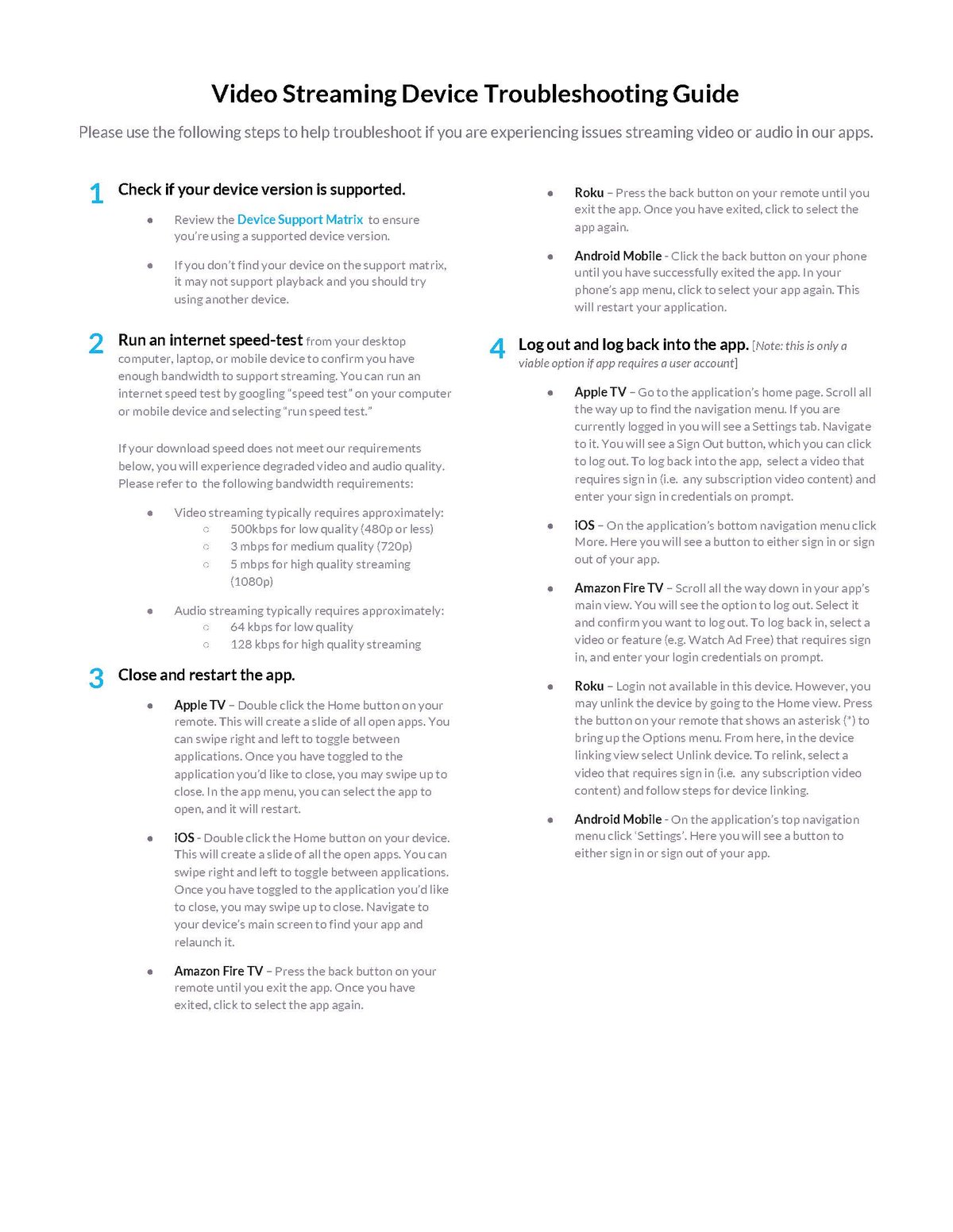
Streaming entertainment has become a cornerstone of modern life, offering unparalleled access to movies, shows, and live events. Yet, the moment that little spinning circle appears, or your crystal-clear 4K picture pixelates into a blurry mess, the magic vanishes. Dealing with Troubleshooting Streaming Problems & Errors can feel like wrestling a digital phantom, frustrating and often leaving you searching for quick fixes. But fear not, because most common streaming headaches have straightforward solutions.
This guide is your authoritative, yet approachable, playbook. We're cutting through the tech jargon to empower you with the knowledge to diagnose and resolve almost any streaming issue, transforming your viewing experience from choppy to utterly seamless.
At a Glance: Your Quick Troubleshooting Checklist
Before diving deep, here’s a rapid-fire checklist for common streaming problems:
- Power Cycle Everything: Unplug your TV, router, and modem for 60 seconds, then plug them back in. This often resolves minor glitches.
- Check Your Internet Speed: Perform a quick speed test. Most streaming services require at least 5-10 Mbps for HD, and 15-25+ Mbps for 4K.
- Go Wired: If possible, connect your streaming device directly to your router with an Ethernet cable for a more stable connection.
- Close Background Apps: Ensure no other devices or apps are hogging bandwidth or system resources on your TV, computer, or network.
- Clear App Cache: For persistent app issues, clear the cache data for the problematic streaming application on your smart TV or device.
- Update Software: Make sure your streaming app, TV firmware, and streaming device are all running the latest versions.
- Inspect Cables: Ensure all HDMI and power cables are securely connected and undamaged.
The Frustration Is Real: Decoding Common Streaming Glitches
You know the feeling: settled in for movie night, only to be met with a digital roadblock. Understanding the symptoms is the first step toward a solution. Here’s what those frustrating errors really mean:
Buffering & Freezing: The Endless Spin
This is perhaps the most common and universally loathed streaming problem. Your video pauses, plays a few seconds, pauses again, or just shows a persistent spinning wheel. Often, this is the tell-tale sign of an unstable or insufficient internet connection, where your device can't download data fast enough to keep pace with playback.
Pixelation & Poor Picture Quality: Blurry Blight
Instead of crisp images, you see large, blocky squares, distorted colors, or a general fuzziness. Sometimes the picture is too dull, other times overly vibrant. This can stem from a few places: a weak internet connection forcing the stream to a lower quality, incorrect display settings on your TV, or issues with the source content itself. It's a clear signal that your device isn't receiving enough data to render a high-definition image, or your TV isn't displaying it correctly.
Audio Out of Sync or Muffled: Dialogue Disasters
Have you ever watched a scene where the characters' lips move, but the sound arrives a beat later? Or perhaps the background music and effects are thunderous, but you can barely hear the dialogue? These audio glitches ruin immersion. Sync issues often point to processing delays between your video and audio signals, while muffled dialogue might be a consequence of your TV's sound settings or the audio mix of the content itself.
Apps Crashing or Failing to Load: Digital Dead Ends
You click on Netflix, Peacock, or HBO Max, and nothing happens. The app might display a black screen and freeze, or simply refuse to launch. These kinds of problems typically indicate a software issue, such as corrupt app data, an outdated app version, or even a conflict with your device's operating system. It's like a computer program crashing – something under the hood isn't working as it should.
Black Screens & Error Messages: The Void
Sometimes, instead of content, you're greeted by a blank black screen or an explicit error code. These are often more severe symptoms, suggesting a deeper problem with the app, your device's hardware or software, or even content incompatibility. Error codes, while cryptic, are usually designed to point towards specific issues, though deciphering them without context can be tricky.
Casting Catastrophes: When Devices Don't Play Nice
You’re trying to cast YouTube from your phone to your smart TV, but your TV isn’t showing up, or the connection keeps dropping. Casting issues are almost always related to network connectivity or compatibility between your casting device and the receiver. Devices need to be on the same network, and sometimes specific apps might not fully support certain casting protocols or TV models.
Why Your Stream Stalls: Pinpointing the Root Causes
Understanding why these problems occur is crucial for effective troubleshooting. Often, multiple factors contribute, creating a perfect storm of streaming frustration.
Your Internet Connection: The Undisputed Kingpin
The vast majority of streaming problems can be traced back to your internet. It's the lifeblood of your online entertainment.
- Insufficient Speed: Many streaming services recommend 5-10 Mbps for HD, and at least 15-25 Mbps for 4K. If your internet plan is below these thresholds, or if your actual speeds are lower than advertised, buffering and poor quality are inevitable.
- Wi-Fi Interference & Distance: Wireless signals can be easily disrupted by other electronics (microwaves, cordless phones), physical obstructions (walls, furniture), and distance from your router. This leads to dropped packets and an unstable connection.
- Network Congestion: Even with fast internet, if multiple devices are simultaneously streaming, gaming, downloading large files, or running bandwidth-intensive background apps, your available bandwidth can quickly get throttled.
Software Snags: Outdated Apps, OS, & Corrupt Cache
Software, like any complex system, can develop glitches.
- Outdated Streaming Apps: Developers regularly release updates to fix bugs, improve performance, and add new features. An outdated app might have known issues that have already been patched.
- Outdated TV Software/Firmware: Just like apps, your smart TV's operating system (OS) receives updates to enhance stability, security, and compatibility. Running old software can lead to unexpected crashes or performance degradation.
- Corrupt Cache Files: Apps store temporary data (cache) to speed up loading times. Over time, this cache can become corrupted or excessively large, causing the app to malfunction, slow down, or crash. Think of it as digital clutter.
Hardware Hiccups: Cables, Routers, & Device Age
Sometimes the problem isn't software but the physical components.
- Loose or Faulty Cable Connections: A loose HDMI cable connecting your streaming stick or console to your TV can cause signal dropouts, black screens, or even prevent video from appearing. Damaged Ethernet cables will obviously disrupt wired internet.
- Router Issues: An old, overheating, or malfunctioning router can significantly degrade your network performance, leading to slow Wi-Fi or intermittent connectivity.
- Aging Devices: Older smart TVs or streaming sticks may struggle with the processing demands of high-resolution video, leading to slowdowns, crashes, or an inability to support newer streaming codecs.
- Backlight Problems: Issues with your TV's backlight can directly impact picture quality, causing dimming, flickering, or uneven lighting.
Background Brawls: Bandwidth Battles & Resource Hoggers
Your streaming device isn't always working in isolation.
- VPNs and Ad Blockers: While useful for privacy and blocking annoying ads, VPNs can add latency by routing your connection through an extra server, potentially slowing down your stream. Some ad blockers might also inadvertently block legitimate content required for streaming.
- Too Many Background Apps: Many smart TVs or streaming devices allow apps to run in the background. Each active app consumes memory and processor power, competing with your primary streaming app for vital resources.
- Other Devices on Your Network: Remember, your internet bandwidth is shared. If someone else is downloading a massive game update or uploading large files, it directly impacts your streaming performance.
Server Side Struggles: When It's Not You, It's Them
Occasionally, the problem isn't on your end at all.
- Streaming Service Outages: Major streaming platforms can experience server issues, leading to widespread outages or degraded service quality. These are usually temporary but affect all users.
- Content Delivery Network (CDN) Issues: Streaming services rely on Content Delivery Networks to efficiently deliver content from servers closer to you. If a CDN experiences problems in your region, it can affect your stream. Understanding the benefits of CDNs highlights how crucial they are for smooth global delivery.
Your Step-by-Step Playbook: Fixing Most Streaming Woes
Now, let's get proactive. This systematic approach will help you tackle issues from the simplest to the more complex.
The Universal First Responder: Power Cycling Everything
This seemingly simple trick is remarkably effective because it clears temporary glitches and refreshes network connections.
- Power Off Your TV/Streaming Device: Turn off your TV and any connected streaming devices (Roku, Fire Stick, etc.).
- Unplug Your TV: Crucially, unplug your smart TV from the wall outlet.
- Unplug Your Router and Modem: Unplug both your internet router and modem (if they are separate devices).
- Wait: Give everything a good 60 seconds (or even two minutes) to fully discharge and reset. For some TVs, a "long press" on the power button for 30 seconds while unplugged can drain residual power from capacitors.
- Plug Back In (Modem First): Plug in your modem first, wait for its lights to stabilize (usually a minute or two).
- Plug In Router: Next, plug in your router and wait for its lights to stabilize, indicating an active internet connection.
- Plug In TV/Device: Finally, plug in your TV and streaming devices.
- Retest: Launch your streaming app and check if the problem is resolved.
Network Nerves: Fortifying Your Connection
Your internet connection is often the bottleneck. Optimizing it is paramount.
Check Your Speed: The Diagnostic Scan
First, confirm your internet speed.
- Use a Speed Test: On a device connected to the same network (preferably via Ethernet), open a web browser and go to speedtest.net or fast.com.
- Compare to Requirements: Check the download speed. Is it consistently meeting or exceeding the recommendations for your desired streaming quality (e.g., 5-10 Mbps for HD, 15-25+ Mbps for 4K)? If your measured speed is significantly lower than what you pay for, contact your Internet Service Provider (ISP).
Go Wired: Ethernet for the Win
Wi-Fi is convenient, but Ethernet is king for stability.
- Connect Directly: If your smart TV or streaming device has an Ethernet port, connect it directly to your router with a good-quality Ethernet cable. This eliminates Wi-Fi interference and generally provides a faster, more reliable connection.
- Inspect Cables: While you're at it, check any existing Ethernet cables for physical damage or loose connections, and replace them if needed.
Optimize Your Wi-Fi Signal
If a wired connection isn't an option, improve your Wi-Fi.
- Router Placement: Place your router in a central location, away from obstructions like thick walls, large appliances (microwaves, refrigerators), and other electronics that can cause interference.
- Switch to 5 GHz: Most modern routers offer both 2.4 GHz and 5 GHz bands. The 5 GHz band offers faster speeds and less interference, making it ideal for streaming. Check your router settings to ensure your streaming device is connected to the 5 GHz band. Be aware that 5 GHz has a shorter range. We have a full guide to help you optimize your Wi-Fi for better performance.
- Update Router Firmware: Check your router manufacturer's website for firmware updates. These can improve performance and security.
Manage Bandwidth: Quiet the Background Noise
Ensure your streaming device has priority.
- Pause Background Uploads/Downloads: Temporarily stop any large downloads, cloud backups, or software updates running on other devices or computers during your streaming session.
- Disable QoS (or Enable Smartly): Quality of Service (QoS) settings on your router can prioritize certain traffic (like video streaming). Sometimes, a misconfigured QoS can hinder performance, so you might try disabling it temporarily. If you know how to configure it correctly, prioritize your streaming device.
- Close Other Streaming Apps: Ensure other devices on your network aren't also streaming, especially in high quality.
Understanding the Difference: Streaming Lag vs. Buffering
It's helpful to distinguish between two common symptoms. Buffering (the spinning circle) is when your device runs out of pre-loaded content. Lag (choppy video, delayed responses to remote) refers to a general slowdown in processing. While often related to network, lag can also indicate device resource issues. For a deeper dive into these nuances, read our explanation of streaming lag vs. buffering.
App & Device Tune-Ups: Clearing the Digital Cobwebs
Sometimes the software itself needs a refresh.
Clear Cache & Data: A Digital Detox
Corrupt or excessive cache is a frequent culprit for app issues.
- On Smart TVs (e.g., Android TV, Roku, Fire TV):
- Navigate to Settings > Apps (or Applications).
- Select the problematic streaming app (e.g., Netflix, Hulu).
- Choose Storage & Cache.
- Select Clear Cache. You might also see an option to "Clear Data" (or "Clear Storage"); use this only if clearing cache doesn't work, as it will reset the app to its factory state and require you to log back in.
- For specific guidance, learn how to clear cache on Android TV and similar devices.
- On Other Devices (Computers, Phones, Tablets): The process is similar, usually found in the app settings within your device's overall settings menu.
Update Everything: Stay Current
Outdated software is a common source of bugs.
- Update Streaming App:
- On Smart TVs: Go to your TV's app store (Google Play Store, LG Content Store, Samsung Apps, Roku Channel Store), find the app, and check for an update. Many TVs have an "Auto Update" option in the app store settings; ensure it's on.
- On other devices: Check your device's app store (App Store, Google Play Store).
- Update Smart TV/Streaming Device Software (Firmware):
- Go to your TV's Settings > Support (or About) > Software Update. Turn on "Auto Update" if available.
- For streaming sticks/boxes, check their respective settings for system updates.
- Update Graphics Drivers (for PC Streaming): If streaming from a computer, ensure your graphics drivers are up to date. Visit your GPU manufacturer's website (NVIDIA, AMD, Intel) to download the latest drivers.
Reinstall Apps: The Fresh Start
If clearing the cache and updating doesn't work, a full reinstall can fix deeper issues.
- Uninstall: Go to your TV's Settings > Apps, select the problematic app, and choose Uninstall.
- Restart TV: Power cycle your TV as described earlier.
- Reinstall: Go back to your app store, search for the app, and Install it again. You'll need to log in fresh.
Close Background Apps: Freeing Up Resources
Too many apps running simultaneously can slow things down.
- On Smart TVs: Many smart TVs allow you to close or force stop background apps. Often, a long press of the power button on your remote (for about 5 seconds) can initiate a full shutdown and restart, clearing all background processes.
- On Computers/Phones: Close any unnecessary applications or browser tabs that might be consuming memory or CPU cycles.
Correct Date & Time: Small Detail, Big Impact
Incorrect date and time settings can sometimes interfere with streaming app authentication or content delivery.
- Check Settings: Go to your TV's Settings > Device Preferences (or System) > Date & Time.
- Enable Automatic: Ensure "Automatic Date & Time" or "Sync with Network Time" is turned on.
Visual & Audio Adjustments: Bringing Clarity Back
Sometimes the stream is fine, but your display or sound settings are off.
Fine-Tuning Picture Settings: Beyond the Default
If your picture looks dull or overly vibrant, it might be your TV's calibration.
- Access Picture Settings: Go to your TV's Settings > Picture (or Display).
- Adjust: Experiment with settings like brightness, contrast, color, tint, and sharpness. Many TVs have preset modes (Cinema, Vivid, Game) that you can try. Avoid "Vivid" mode for serious viewing, as it often over-saturates colors. For comprehensive advice on getting the best visuals, check out our guide on Smart TV picture settings.
- Disable Motion Smoothing: Features like "motion interpolation" (often called TruMotion, Auto Motion Plus, etc.) can create a "soap opera effect" that some dislike; try disabling them.
Resetting Sound: When Dialogues Get Lost
For quiet dialogues or unbalanced sound.
- Access Sound Settings: Go to your TV's Settings > Sound > Expert Settings (or similar).
- Reset Sound: Look for an option to "Reset Sound" or "Reset Audio Settings." This often resolves strange audio balance issues.
- Check Audio Output: Ensure your TV's audio output is configured correctly for your sound system (e.g., HDMI ARC, Optical, internal speakers).
Syncing Audio & Video: The Clap Test
For advanced setups like live streaming or using external capture devices, precise audio/video synchronization is key.
- Perform a Clap Test: Record yourself clapping directly into the camera/microphone. Play back the recording. If the sound of the clap doesn't match the visual of your hands meeting, you have a sync issue.
- Adjust Delay: In software like OBS Studio, you can add a millisecond delay to your audio or video sources to bring them back into alignment.
Inspecting Cables: The Often Overlooked Culprit
Don't underestimate simple cable problems.
- HDMI Connections: Ensure all HDMI cables are firmly seated in their ports. Try unplugging and replugging them. If you suspect a faulty cable, try swapping it with a known good-quality HDMI cable, especially for 4K streams which require high-speed HDMI cables.
- Power Cables: Confirm power cables for all devices are secure.
- Clean Ports: Gently clean any dust or debris from ports if you suspect a connection issue.
Advanced Strategies for Power Streamers & Creators
If you're dealing with live streaming, content creation, or have a more complex home network, these tips take troubleshooting to the next level.
Encoding & Bitrate Brilliance: The Art of Clarity
For those creating or managing streams, optimizing encoding is vital.
- Match Bitrate to Upload Speed: Your stream's bitrate should be less than your available upload speed. For 1080p at 30 frames per second (fps), aim for an upload bitrate of around 4 Mbps. For 720p, 3 Mbps. If your connection is weak, lowering the resolution and bitrate will reduce buffering for your viewers.
- Implement Adaptive Bitrate Streaming (HLS/DASH): For content providers, using technologies like HTTP Live Streaming (HLS) or Dynamic Adaptive Streaming over HTTP (DASH) allows you to offer multiple quality options. Viewers' players can then automatically switch to the most suitable quality based on their current network conditions.
- Balance Frame Rates with Connection: While 60 fps offers smoother motion, it requires significantly more bandwidth than 30 fps. Only use 60 fps at higher resolutions (like 1080p) if your upload connection is robust.
- Content-Aware Encoding: Some advanced platforms use AI to dynamically adjust bitrate and resolution in real-time based on the complexity of the scene, ensuring consistent quality and preventing dropped frames during intense action sequences.
Leveraging CDNs: Global Reach, Local Speed
Content Delivery Networks (CDNs) are essential infrastructure for global streaming.
- Multi-CDN Approach: Distributing your content across multiple CDNs provides redundancy and load balancing. If one CDN experiences an issue, traffic can be seamlessly routed through another, ensuring continuous delivery.
- Edge Servers in Key Regions: Choosing a CDN with "edge servers" geographically close to your audience significantly reduces latency and speeds up stream start times, improving the user experience.
- Caching Strategies: Using appropriate
cache-controlheaders (likemax-ageands-maxage) ensures that popular streams are cached at the CDN's edge, minimizing requests to the origin server. For premium content, integrate Digital Rights Management (DRM) to protect your assets.
Hardware & Software Stability: The Foundation
Your local hardware and streaming software need to be in top form.
- Optimize Encoder Settings: If you're using software like OBS Studio, leverage dedicated hardware encoders (e.g., NVIDIA's NVENC for GeForce GPUs, AMD's AMF, or Intel's Quick Sync Video). For 1080p at 30 fps, a bitrate of 4000 Kbps and a keyframe interval of 2 seconds are good starting points.
- Monitor Resource Usage: Use tools like MSI Afterburner, HWMonitor, or OBS's built-in Stats window to keep an eye on your CPU, GPU, and network usage. High CPU or GPU utilization can lead to encoding lag or dropped frames.
- Maintain Proper Cooling: Overheating components can lead to throttling and instability. Ensure your computer's case fans are clean, airflow is unobstructed, and thermal paste (for CPU/GPU) is reapplied annually if needed. Set fan curves to engage effectively when temperatures rise.
When All Else Fails: Reaching Out for Help
Sometimes, despite your best efforts, the problem persists. It's time to call in the cavalry.
Contact Streaming Service Support
If a specific app is consistently giving you trouble, reach out to their support team. They can check for account-specific issues, regional outages, or provide platform-specific troubleshooting steps. Have your account details and a clear description of the problem (including any error codes) ready.
Contact TV/Device Manufacturer Support
If multiple apps are failing, or if your TV itself is exhibiting strange behavior (e.g., black screen even when not streaming), contact your TV or streaming device manufacturer (e.g., Samsung, Sony, LG, Roku). They can help with hardware diagnostics, firmware issues, or device-specific bugs.
Check Service Status Pages
Before contacting support, do a quick check online. Many services have status pages or social media (like X/Twitter) where they announce widespread outages or known issues. Sites like Down Detector can also show if other users in your area are reporting similar problems.
Beyond the Fix: Preventing Future Streaming Headaches
The best troubleshooting is prevention. A little proactive maintenance goes a long way.
- Regular Maintenance: Make it a habit to periodically clear app caches, check for software updates, and power cycle your network equipment.
- Invest in Good Hardware: A reliable, modern Wi-Fi 6 (or newer) router can make a significant difference in network performance. Use good-quality, certified HDMI and Ethernet cables.
- Monitor Your Internet Usage: Be mindful of how many devices are actively using your internet, especially for bandwidth-intensive tasks. Consider setting up QoS on your router to prioritize your streaming devices during peak viewing hours.
Your Path to Seamless Entertainment
Dealing with Troubleshooting Streaming Problems & Errors doesn't have to be a battle. By understanding the common symptoms, pinpointing the underlying causes, and systematically applying these fixes, you're well on your way to a consistently smooth and enjoyable viewing experience. With these tools in your arsenal, you can confidently stream high-quality movies and shows, letting the only drama be on the screen, not behind it. Happy streaming!